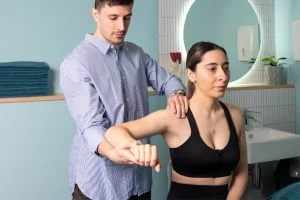
Neck pain has quietly become one of those things people just put up with. It slips in during long workdays, shows up after a stressful week, or greets you first thing in the morning before you’ve even stretched. Most people brush it off but neck pain almost always has a clear cause, and once you understand why it’s happening, preventing it becomes far more manageable.
Physiotherapists and Osteopaths see patients with neck pain every single day. Sometimes it’s a sharp pinch after a workout, sometimes it’s stiffness that’s been building for months, and sometimes it’s a dull nagging ache that never entirely goes away. The reasons behind it are usually simple, familiar and fixable.
Let’s just walk through the most common causes and what you can do so your neck stays comfortable, supported and not constantly on edge.
Why the Neck Reacts So Fast
Your neck is small but it does a massive amount of work. It holds up the weight of your head, which is heavier than most people realise. It lets you turn, tilt and move throughout the day but it’s both strong and surprisingly flexible.
So if something feels off, like your posture, stress, or the way you move, the neck usually answers pretty fast. If you keep it in weird positions for too long, or you repeatedly load it, the muscles can start to tighten up, the joints begin to feel stiff, and discomfort starts to show up.
- Posture That Quietly Slides the Head Forward
One of the biggest drivers of neck pain is posture, especially the version that sneaks in without you noticing. Hours spent leaning toward a laptop, scrolling on a phone, or simply sitting with no solid support slowly pulls the head forward. When that happens, the neck muscles get stuck in overdrive trying to hold the head upright, not letting it sag.
You might notice:
- A heavy feeling near the base of the skull,
- Tightness across the shoulders, more than usual,
- A dull ache after long work sessions, or even after commuting.
- Everyday Motions That Irritate the Neck
Neck strain doesn’t always come from big, dramatic injuries. Sometimes it happens because you slept in an odd position, or you kept carrying a heavy bag on just one shoulder. Even quick motions during exercise can flare things up if your body isn’t really ready for it.
Common triggers are:
- Waking up stiff after sleeping awkwardly,
- Looking down at a phone for a long time,
- Turning the head too fast during a workout,
- Lifting weights while the shoulders stay rounded.
Physiotherapy & Osteopathy helps by easing the pressure, restoring flexibility, and demonstrating safer movement habits, so the whole area feels less strained.
- Stiff Joints That Limit Movement
The joints in your neck can get stiff from repeated motions, poor mobility, or simply staying in one posture for too long. When the joints start moving less smoothly, the nearby muscles work harder as a workaround, creating a loop of discomfort.
You may run into:
- Trouble turning your head all the way,
- A “blocked” feeling when you try to look over your shoulder,
- Discomfort when you tilt your head.
Manual therapy, stretching, and mobility exercises support restoring range and reducing stiffness over time.
- Workstations That Don’t Match Your Body
A poorly put together workspace is one of the most easily ignored causes of neck pain. For example, when your monitor is sitting too low, or your chair doesn’t really support you, and the keyboard is too far away, then your neck ends up doing more work than it ever should.
Signs your workstation is contributing:
- Leaning forward to see the screen,
- Shoulders creeping upward while typing,
- Feeling stiff after long work sessions.
Small ergonomic changes often make a surprisingly big difference.
- Exercise Technique That Loads the Neck Incorrectly
Exercise is great for the body, but if your technique is off, it can put extra strain on the neck. This comes up a lot in weightlifting, cycling, swimming, and running.
Examples include:
- Lifting weights with the head jutting forward,
- Cycling with the neck stretched out for long periods,
- Swimming with breathing that isn’t even on both sides,
- Running with shoulders held tight, turning the upper body into a lock.
Physiotherapists & Osteopaths help refine the way you move so the neck stays relaxed and properly supported.
- Weak Supporting Muscles
The neck doesn’t on it’s own.
You might notice:
- Getting tired faster during desk work,
- Struggling to sit upright for long stretches,
- Shoulders rounding forward, like they’re slowly collapsing.
Strengthening these supportive muscles is one of the best long term approaches because it helps your neck get back its share of the job.
How Physiotherapy and Osteopathy Helps Neck Pain
Physiotherapy & Osteopathy isn’t only about keeping pain quiet for a little while. It’s more about understanding why it started in the first place, and then making sure it doesn’t return.
We view neck discomfort in a wholistic way:
- A thorough assessment, including posture, movement patterns, muscle strength, joint mobility and everyday habits,
- Hands-on treatment: soft tissue work, joint mobilisation, and techniques that reduce stiffness and improve motion,
- Focused exercises for deep neck flexors, upper back and shoulder stabilisers,
- Posture retraining with practical strategies that help alignment throughout the day,
- Lifestyle and ergonomic guidance, like workstation tweaks, sleep setup, and small routine adjustments.
Simple Ways to Prevent Neck Pain
These habits help with reducing neck pain,
- Keep screens at eye level,
- Take short movement breaks through the day,
- Strengthen your supportive neck muscles.
Frequently Asked Questions
- When should I actually see a Physiotherapist or Osteopath ? If your neck pain keeps coming back, limits your motion, or just hangs around for more than a few days, then booking a consultation can help you sort out the reason and guide you through treatment, step by step.
- Can physiotherapy help neck pain when it’s posture related pain? Yes, physiotherapy is one of the more effective routes for easing posture related discomfort, especially if your daily habits keep triggering it.
- How long until I feel better? Most people start noticing improvement within a few sessions, mainly when they stick with their exercises regularly, not only “sometimes”.
- Can stress truly cause neck pain? Absolutely. Stress makes the muscles around your neck and shoulders tighten up, and that tightening can turn into discomfort, or a dull ache.
- What sleeping position is best? Sleeping on your back or side with a supportive pillow helps keep a neutral alignment so your neck doesn’t twist in an awkward way.
- Do workstation changes really help? Yes, even small ergonomic tweaks can make a big difference, they cut down daily strain more than you’d expect.